

Rocketry
Video intro to the CAP model rocketry program:
How to get to the CAP model rocketry program handbook - useful when taking the exams and essential if doing the program on your own:
-
Logon to eServices
-
Go to Absorb LMS
-
Search for "rocketry" and click on the Model Rocketry resource.
Note: the squadron has a printed book for loan as well.
How to take the online rocketry tests
Handy Links:
-
Tripoli Panhandle of Texas This is the launching site near Boys Ranch. Note: sometimes they have a hard time updating the site when a launch is canceled -- check your email the night before!
-
AC Supply -- Good for bulk kits and motors. Use CAP5 for a discount./
-
Apogee Rocket Store - includes the more advanced stuff
-
Hobbylinc - good prices usually for individual rockets
-
Besides those online stores for rocket kits, Hobby Lobby has some as well.
-
If you are buying your own rocket kit (as opposed to building one the squadron provides) then please buy some rocket motors for that kit. We cannot be sure that motors the squadron has will work with your rocket.
The squadron uses two different areas for launching rockets. John Stiff Park or the Tripoli Panhandle of Texas rocketry group's site near Boy's Ranch.
John Stiff Park
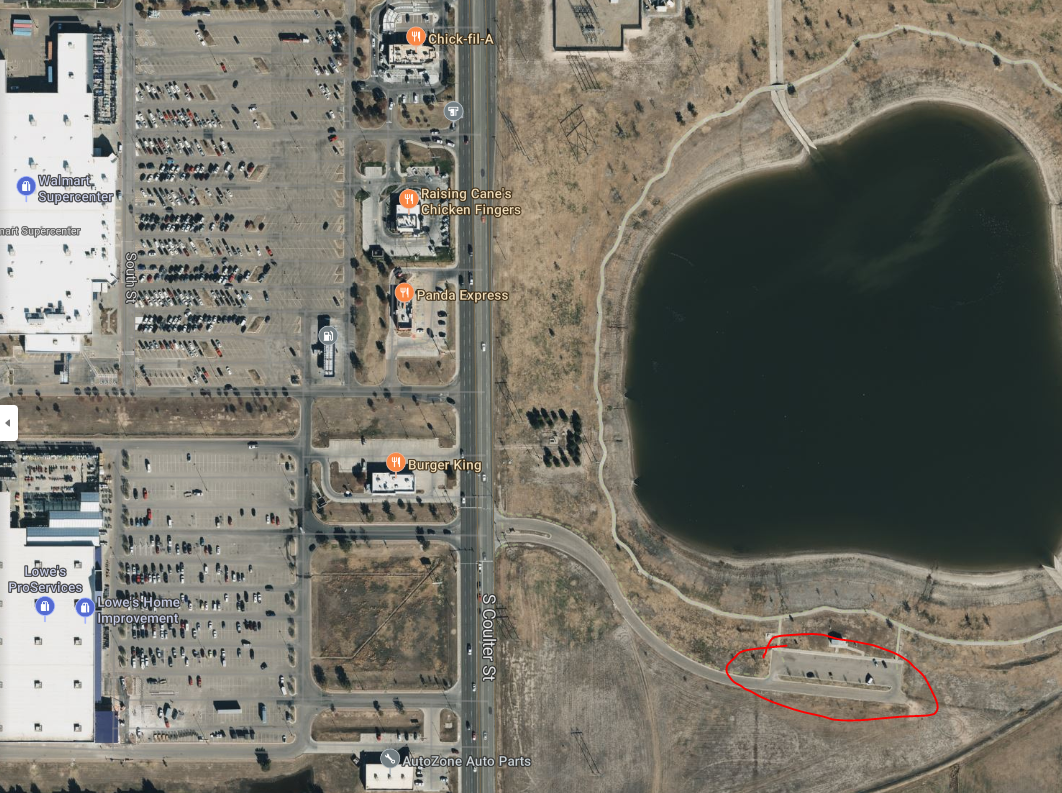
We meet near the parking lot by the pond on the west side of John Stiff Park off Coulter, north of Hillside Rd and south of 45th Ave. Address is approximately 4900 S Coulter if you are using a GPS (turn to the east from there, opposite the main entrance to Lowes).
Tripoli Panhandle of Texas
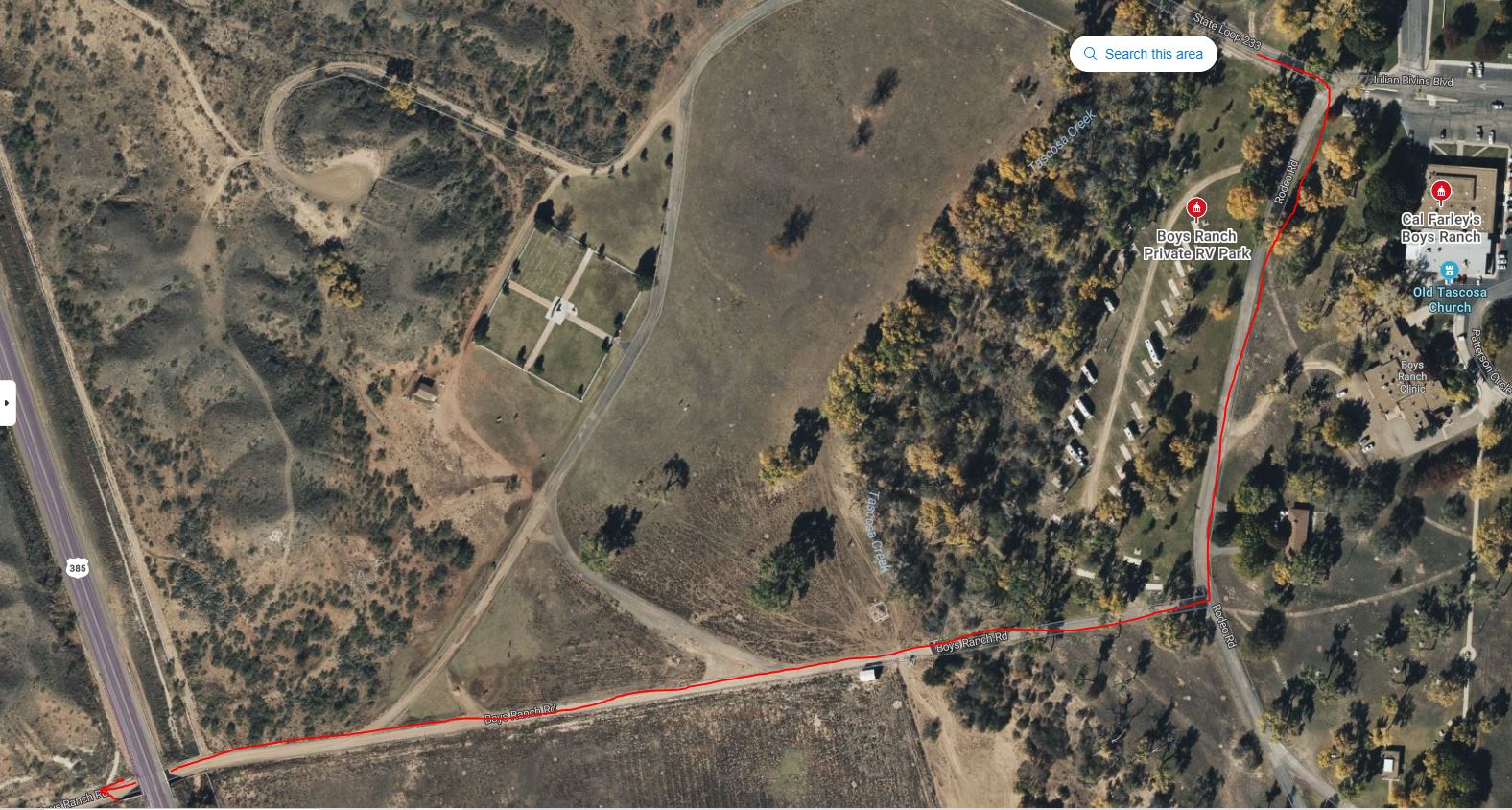
On scheduled launch days by the Tripoli Panhandle of Texas rocketry group, the map below shows the directions to the site. From north bound 385 enter Boy's Ranch and take the second right (Rodeo Rd). Go past the RV park and take the first right. It will take you to an underpass, and after that it will turn into a dirt road. From the underpass it is 1.3 miles to get to the launch site. GPS coordinates 35.536098, -102.288379. We will typically take the squadron van, but parents have the option to drive there as well.

Detail of turns to make at Boy's Ranch:
Hints for rockets:
-
If the goal is to get cadets to their rocketry patches, spend the first 15 - 20 minutes of the session going over the section in the rocketry book, and encourage them to take the test in eServices. Only building a simple kit can be done in 45-minutes or so. Complicated kits, or going over the rocketry book section and a kit will take two 45-minute sessions. A PowerPoint presentation that can be used is here.
-
Fizzy Flyer: after adding water to the capsule, close it firmly then give it a good shake before placing it on the ground. It can be challenging to get much of a launch with them.
-
Goddard Rocket: Push the straw an inch into the insulation then put the cable tie in front of it -- it will hold the straw in place much better there.
-
Soda Bottle Rocket:
-
Fewer families use 2 liter bottles these days -- let the cadets know well in advance to start saving them.
-
Use sand (not nuts and washers) for the weight. Do not want to scatter FOD around the airport!!!
-
These can go very high--try to keep them off hanger roofs. Launch them in the daylight and in the middle of the large field. When launching, everyone needs to have eyes on the rocket so it does not fall on them.
-
A launcher, that can be used with a portable air tank or air compressor, is at HQ. It takes a quick connect female air coupling. Must use a pressure regulator for safety.
-
-
Rocket Kits:
-
Avoid rockets that use streamers, they tend to come down too fast, and the rockets tend to be of a small diameter which makes them harder to make. Stick with kits that use parachutes.
-
Avoid do-it-yourself parachutes. They were used once and the cadets had problems with them.
-
Use LOTS of glue when fastening the bungie cord to the inside of the rocket tube.
-
CAP often offers packs of Alpha rockets as a STEM kit.
-
When building rockets,
-
First thing, have the cadets write their names on the rocket!!! Otherwise, they all look alike.
-
Second thing, get a piece of paper and have he cadets sort out all the parts to the kit and identify them by the letter or number they are labeled as in the instructions. Draw boxes on the paper for each part, and sort them out accordingly. Some parts are similar, but not the same. This step will save a lot of trouble.
-
There are two basic approaches to building rockets: A) everyone does the same step at the same time, following one leader. B) put an experienced rocket builder at each table and they all work at their own pace.
-
-
For multi-stage rockets that have fins for both stages, glue on the fins for the two stages in matching pairs -- much easier to line up the fins that way between the two stages.
-
Glue will get on the hands of cadets -- have paper towels, wet wipes, etc., available.
-
We have three types of glue:
-
Plastic model glue, for bonding plastic parts together only.
-
Wood glue, for boding paper, carboard, and wood together. Good for filleting fins.
-
E6000 glue, probably the best, but wood glue works also. Screw tops tend to stick.
-
-
CAP frowns on cadets using hobby knives. Have them mark where a cut needs to be made and have them take it to a senior member.
-
Think about having cadets take their completed rocket home and painting it a highly visible color if it is not already of a bright color-- white and tan rockets can be hard to find in the desert. Thin coats of spray paint should be used.
-
-
Firing Rockets:
-
At the Rocketry Society site, we are under their rules, and they can provide a briefing. But we need to supplement that given our own safety analysis.
-
At John Stiff, we are under our rules and there needs to be a safety analysis. Give a safety briefing before the event. Assign a safety officer to the event. Bring a fire extinguisher. In 2025 C/Maj LeGate clarified with the city Fire Marshal, Capt Mirch Armstrong that a permit is not needed to launch there. Rockets need to stay under 5,000 feet.
-
Weather: At the Rocketry Society site, they will cancel if the weather is not good. At John Stiff we have launched with no problems with winds up to 15MPH. Suggest monitoring the National Weather Service some days in advance. A day ahead of time, go to the hourly forecast to check on forecasted winds and gusts at the time of the planned launch.
-
In the CAPF 60-80 for the event, remind cadets to bring sun screen and water.
-
Save the instruction sheets for the rockets built to see what motors they use, and also to see how many squares of wadding to include.
-
Position the launching pad upwind of where the rockets should come down. Be aware that wind direction may be different one hundred + feet off the ground and an adjustment may need to be made after the first launch.
-
If measuring altitude with the protractor device, get a long way away from the launch pad. Suggest using a web map program where distance can be measured and find landmarks to determine the distance. A few hundred yards away is good.
-
Use fresh batteries in launchers. Low batteries will not ignite the fuses. Bring extra, new batteries!
-
Make sure the fuses do not short circuit -- when this happens, the launch controller will show continuity, but the fuse will not go off. 90% of the time if a rocket does not launch it is a short circuit with the fuse or the fuse was not inserted far enough. Rarely is it a dud motor.
-
Launching. Alert everyone to the launch and count down from 5. Everyone needs to have eyes on the rocket until it lands.
-
Recovery:
-
Two cadets go to recover each rocket. For cadets who have taken ICUT, consider issuing squad radios.
-
One cadet keeps eyes on where the rocket went down, and the other looks where they are stepping. Do not run. Go slow and watch for hazards. Prairie dog holes and rattle snakes can be hazards at some launch sites.
-
If a rocket is on powerlines, in a tree, on private property, etc., then leave it.
-
-
Suggest bring a folding table for a work surface for putting engines into rockets, packing parachutes, etc.
-
Pack out all trash. Suggest a metal coffee can for the used rocket motors. Be careful that rocket motors may be hot after firing.
-


